
PHYSICS
- Scattering neutrinos to probe the fundamental laws of the universe
 by admin on 25/09/2026
Many people who are successful in STEM fields were lucky to have someone who turned them on to a topic and encouraged their interest. For Faith Reyes, that person was her high school physics teacher, Ms. Bolster. Whereas Reyes had earlier studied math and science without seeing how those subjects […]
- Astrophysicist Dr Nergis Mavalvala explains how scientists ‘listen’ to the universeby Kim Heatley on 23/09/2026
Speaking at the University of Karachi, Prof. Nergis Mavalvala, Dean of the MIT School of Science, delivered a special lecture titled “Listening to the Universe Above the Quantum Din.” Addressing a packed auditorium of students and faculty, Mavalvala detailed how gravitational-wave astronomy has […]
- Podcast: SHASS’s special sauceby admin on 22/09/2026
Following World War II, the MIT faculty convened a committee to assess the Institute’s principles of education and their relevance “in a new era emerging from social upheaval and the disasters of war.” One of the outcomes of this pivotal report was the establishment of the School of […]
- Twisting 2D nanomaterials unlocks exotic quantum phases of matterby Kim Heatley on 21/09/2026
The field of “twistronics” examines how misaligning adjacent two-dimensional nanomaterials at precise angles creates moiré superlattices that drastically alter their electronic, magnetic, and optical behaviors. The field gained momentum after MIT Professor Pablo Jarillo-Herrero and his group […]
- ‘Vacuumtronics’ could help make better superconductorsby Kim Heatley on 17/09/2026
Vacuumtronics is an emerging paradigm that leverages engineered quantum vacuum environments to manipulate and enhance the properties of solid-state materials, particularly superconductors. Traditional approaches to raising a material’s superconducting transition temperature rely heavily on […]
- Robotic lab sets up and runs optics experiments on demandby admin on 17/09/2026
Every new generation of phone display, television screen, and solar panel is a result of precision optics experiments, which use lasers and other light sources to measure the optical properties of candidate materials. These experiments can take months to run, requiring scientists to meticulously […]
- New artist residency program at MIT expands views of the cosmosby admin on 16/09/2026
MIT’s Kavli Institute for Astrophysics and Space Research (MKI) is launching a pilot artist-in-residence program to facilitate cross-disciplinary dialogue between art, science, and the public. MKI is a world-leading institution for research in astrophysics, combining more than 60 years of […]
- ‘Odd couple’ black holes can find each other in spaceby Kim Heatley on 11/09/2026
TL;DR: A recent study led by MIT Ph.D. candidate Cailin Plunkett, alongside co-author Professor Salvatore Vitale, reveals that many black holes are “second-generation,” meaning they were formed by previous black hole collisions rather than dying stars. By analyzing gravitational wave data, […]
- How Twisting Two-Dimensional Materials Led to a New Field of Research
 by Kim Heatley on 08/09/2026
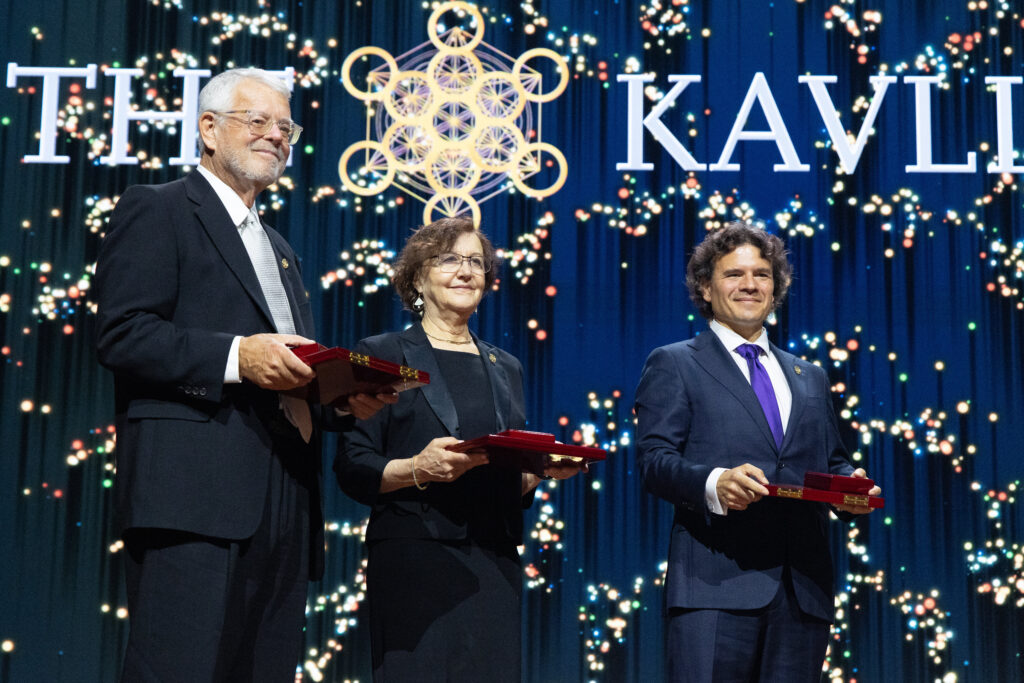
Placing two lattices – like window screens – on top of each other and twisting one layer compared to the other creates intriguing patterns. In fact, there are toys based on the designs that emerge, called moiré patterns. But moiré patterns aren’t just visually interesting. At the […]
- New research shows a neutrino laser is impossibleby admin on 02/09/2026
Neutrinos are the pervasive yet intangible particles that permeate the universe, streaming through whole planets, stars, and our bodies by the trillions each second. The elementary particles are often described as “ghostly” for their near-zero mass and their elusive nature, as they have very […]
- EPJ QT Highlight - Teaching quantum entanglement with card games
 by sabine.lehr@springer.com (EPJ) on 10/02/2026
Understanding violation to Bell’s Inequality with a card game Simple interactive activities help non-expert audiences to grasp the core concepts of quantum entanglement and the Nobel Prize-winning experiments that proved how quantum mechanics defies classical physics Even compared with other […]
- EPJ QT Highlight - Exploring the full-stack design space of quantum computing
 by sabine.lehr@springer.com (EPJ) on 10/02/2026
Illustration of fidelity vs. connectivity across benchmarks as facets comparing three crosstalk models, thermal relaxation, and depolarisation noise for the heavy-hex back-end topology. In-depth analysis shows that co-designing hardware and software is essential for optimising quantum […]
- EPJ QT Highlight - Progress in terrestrial very long baseline atom interferometry
 by sabine.lehr@springer.com (EPJ) on 12/05/2025
Atom interferometers (here labelled AION, AEDGE and AEDGE+) fill a crucial frequency gap in gravitational wave detection, in the deci-Herz range. The second of a series of workshops, held in London in April 2024, saw over 250 experts make progress towards a blueprint for a kilometre-long atom […]
- EPJ QT Highlight - Generating true randomness with quantum measurements
 by sabine.lehr@springer.com (EPJ) on 10/02/2025
Inherent randomness in photon detection times A new approach can generate random information with extremely high efficiency through a process involving the emission and subsequent detection of single photons From simulation to cryptography, randomness is a vital resource in many areas of […]
- EPJ QT Highlight - Access to burgeoning quantum technology field could be widened by open master educational model
 by sabine.lehr@springer.com (EPJ) on 04/03/2024
The operation of the Open Master pilot scheme. Credit: S. Goorney, et al., EPJ Quantum Technology, (2024) Quantum technology offers major societal benefits, but its growth depends on the supply of a qualified workforce. Quantum Technology is based on the engineering of devices that make use […]
- EPJ Quantum Technology: New Review Article The Deep Space Quantum Link (DSQL)
 by sabine.lehr@springer.com (EPJ) on 12/10/2022
A new review lays out a roadmap for quantum technologies. Credit: Robert Lea Space-based quantum optical links support future networking applications for quantum sensing, quantum communications, and quantum information science. In addition, such links enable new scientific experiments […]
- EPJ QT Highlight - Quantum control for advanced technology: Past and present
 by sabine.lehr@springer.com (EPJ) on 29/07/2022
A new review lays out a roadmap for quantum technologies. Credit: Robert Lea Quantum devices are a promising technological advance for the future, but this will hinge on the application of quantum optimal control top real-world devices. A new review looks at the status of the field as it […]
- EPJ QT Highlight - Steps towards post-quantum security by Aleksey Fedorov
 by sabine.lehr@springer.com (EPJ) on 21/07/2021
Aleksey Fedorov Prof. Dr. Aleksey Fedorov is a Junior Principal Investigator at the Russian Quantum Center, Professor of Physics at Moscow Institute of Physics and Technology, and founder of startup companies in quantum technologies. His research is related to quantum information technologies […]
- Welcoming Prof. Kai Bongs as new Editor-in-Chief of EPJ Quantum Technology
 by sabine.lehr@springer.com (EPJ) on 26/01/2018
Kai Bongs It is with great pleasure that we announce that Professor Kai Bongs from the University of Birmingham, UK, has been appointed Editor-in-Chief of EPJ Quantum Technology. Prof. Bongs is the director of the UK National Quantum Technology Hub in Sensors and Metrology, a consortium of […]
- EPJ QT Highlight - How does Earth’s spacetime deformation affect quantum communications?
 by sabine.lehr@springer.com (EPJ) on 30/05/2017
Credit: CQT, National University of Singapore Jan Kohlrus investigates relativitic effects to consider when setting up quantum communication systems. The interplay and overlap between relativity and quantum theory are among the most complex and challenging open problems of modern theoretical […]
- EPJ TI Highlight - Advanced software sharpens scintillation images of low-energy gamma rays
 by sabine.lehr@springer.com (EPJ) on 23/04/2026
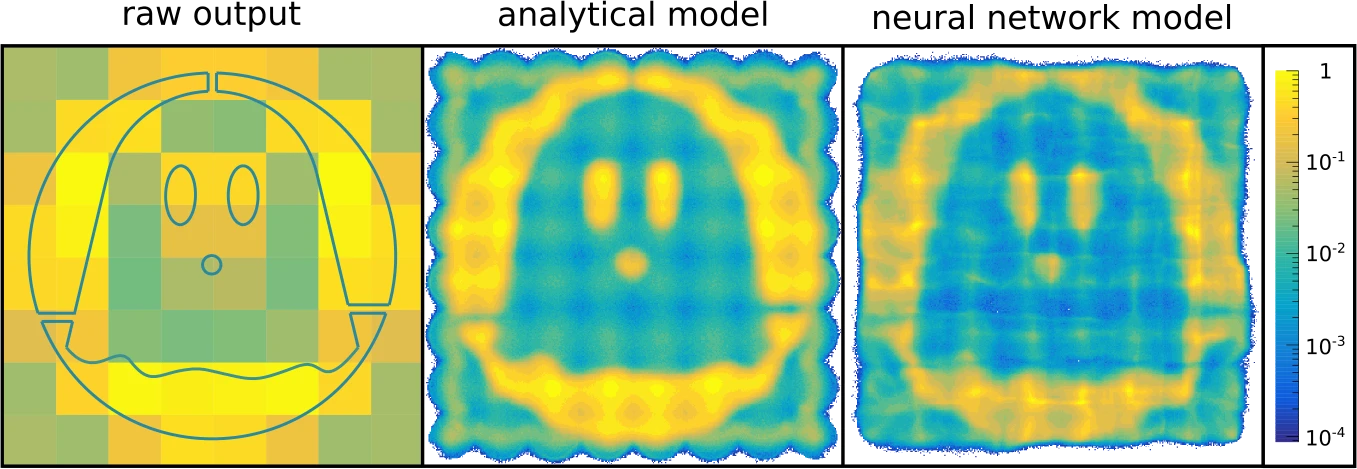
Imaging dataset processing results for the raw output, analytical model, and neural network model. The white mask contour is overlaid on the raw image for reference. All images are plotted with the intensity on a logarithmic scale By combining a monolithic scintillation detector with […]
- EPJ H Highlight - Suraj N. Gupta: Retracing the contributions of a quantum gravity pioneer
 by sabine.lehr@springer.com (EPJ) on 23/04/2026
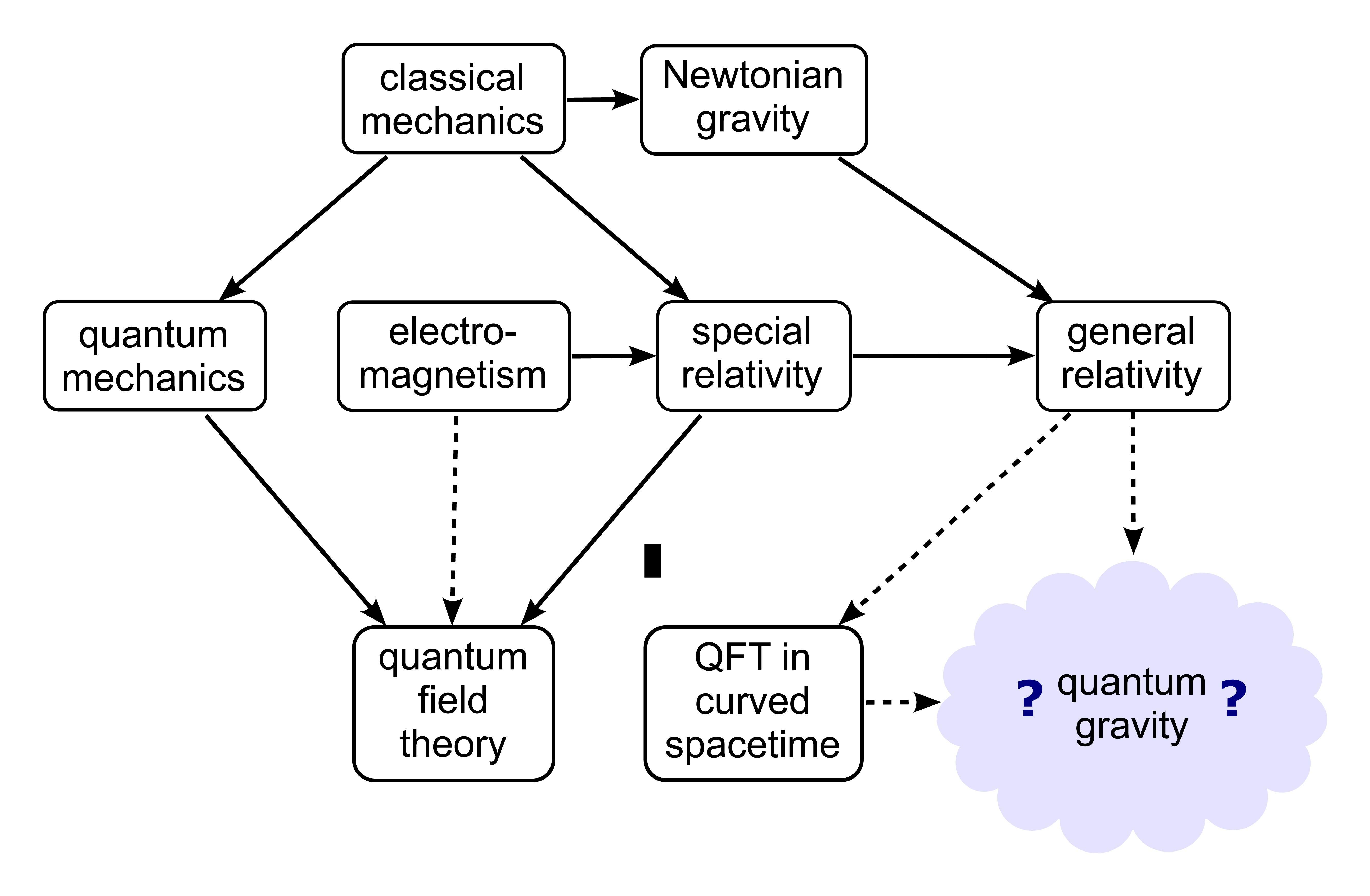
Gupta was an early pioneer of quantum gravity. Credit: original by Raidr vectorisation by B. Jankuloski A new historical overview retraces the early work of Suraj N. Gupta, whose pioneering efforts explored how Einstein’s description of gravity could be brought into the framework of quantum […]
- EPJD Topical Issue : Exploring dissociative electron attachment: Insights from the 4th DEA Club Meeting (2024)
 by muriel.bouquant@edpsciences.org (Muriel Bouquant) on 16/04/2026
Guest Editors: João Ameixa, Juraj Fedor, Ilko Bald, Nigel Mason, Sylwia Ptasinska The Topical Issue "Exploring Dissociative Electron Attachment: Insights from the 4th DEA Club Meeting", highlights recent contributions by the dissociative electron attachment (DEA) community, which were conceived […]
- Anna Grigoryan new representative of the EPS Young Minds in EPJ Scientific Advisory Committee (SAC)
 by sandrine.karpe@edpsciences.org (Sandrine Karpe) on 24/03/2026
The Steering Committee of EPJ is delighted to welcome Anna Grigoryan, as the representative of the EPS Young Minds which joined the Scientific Advisory Committee two years ago. She is replacing Carlos Damián Rodríguez Fernández. The scientific community is pleased to highlight Anna […]
- EPJ Web of Conferences Highlight – 18th European Workshop on Modern Developments and Applications in Microbeam Analysis
 by elodie.guillaud@edpsciences.org (Elodie Guillaud) on 20/03/2026
The 18th European Workshop EMAS 2025, Mataró, Spain. The 18th Workshop of the European Microbeam Analysis Society (EMAS) on Modern Developments and Applications in Microbeam Analysis took place in Mataró, Spain from 11-15 May 2025. The EMAS European Workshops have been organized every […]
- Farewell Antonino Zichichi
 by sabine.lehr@springer.com (EPJ) on 18/03/2026
Antonino Zichichi© Società Italiana di Fisica - SIF Professor Emeritus at the University of Bologna, Member of the Pontifical Academy of Sciences, the Academia Europaea and the Academy of Sciences of the Institute of Bologna, and founder of the "Ettore Majorana" Centre for Scientific Culture […]
- EPJ Plus Highlight - Image processing brings new clarity to RTe3’s electronic structure
 by sabine.lehr@springer.com (EPJ) on 05/03/2026
Applying image processing to ARPES measurements By applying image segmentation to ARPES data, researchers reconcile Fermi surface measurements with magnetic quantum oscillations and precisely determine the size of tiny electron pockets in rare-earth tritellurides. Rare-earth tritellurides […]
- EPJ Plus Focus Point: Nuclear microprobe technology and applications
 by sabine.lehr@springer.com (EPJ) on 05/03/2026
Guest Editors: Noelia Maldonado, María Dolores Ynsa, Belén Cortés, José Olivares Villegas, Teresa Pinheiro, Esther Enríquez, M. Carmen Jiménez-Ramos, Gastón García This Focus Point issue includes 19 papers showcasing the diversity and innovation within the nuclear microprobe community, […]
- EPJ Plus Focus Point: CBRNE events: prevention, mitigation, consequences and recovery
 by sabine.lehr@springer.com (EPJ) on 04/03/2026
Guest Editors: Andrea Malizia, Marco D’Arienzo, Gian Marco Contessa, Francesco d’Errico, Susana de Souza Lalic, Frank Duschek, Vasilis Vasiliou, Antony M. Hooker, Pasquale Gaudio CBRNE (Chemical, Biological, Radiological, Nuclear and Explosive) events remain among the most complex and […]
- EPJ Plus Highlight - GEMINI: Suppressing seismic noise for future gravitational-wave detectors
 by sabine.lehr@springer.com (EPJ) on 04/03/2026
Sensor for isolating seismic noise By refining seismic isolation and control strategies deep underground, GEMINI aims to unlock the low-frequency frontier of gravitational-wave astronomy Since the first observation of gravitational waves in 2015, detectors including LIGO, Virgo, and KAGRA have […]
- EPJ C: Julia Vogel new Editor-in-Chief for Experimental Physics II: Astroparticle Physics
 by sabine.lehr@springer.com (EPJ) on 12/12/2025
Julia K. Vogel (Credit © Mattie Trigo) The publishers of The European Physical Journal C – Particles and Fields are pleased to announce the appointment of Professor Julia K. Vogel as new section Editor-in-Chief for Experimental Physics II: Astroparticle Physics, succeeding in this role to […]
- EPJ C: Markus Elsing new Editor-in-Chief for Computing, Software and Data Science
 by sabine.lehr@springer.com (EPJ) on 28/01/2025
Markus Elsing The publishers of The European Physical Journal C – Particles and Fields are pleased to announce the appointment of Dr Markus Elsing as Editor-in-Chief for the newly created section on Computing, Software and Data Science as of January 2025. Markus Elsing is a senior […]
- EPJ C: Susha Parameswaran appointed Guest Editor for String Phenomenology
 by sabine.lehr@springer.com (EPJ) on 18/10/2024
Susha Parameswaran EPJ C is pleased to announce the appointment of Susha Parameswaran as the journal’s Guest Editor for String Phenomenology. Susha Parameswaran is a theoretical physicist based in the UK at the University of Liverpool. Her research interests are in string theory and its […]
- EPJ C Highlight - The ALICE experiment – A journey through QCD
 by sabine.lehr@springer.com (EPJ) on 04/09/2024
ALICE Collaboration The comprehensive review article “The ALICE experiment – A journey through QCD” has been recently published in the European Physical Journal C (EPJ C). As of today, QCD is a gauge theory describing the interactions of quarks and gluons, the carriers of the strong […]
- EPJ C: Francesco Forti new Editor-in-Chief for Experimental Physics I: Accelerator Based High-Energy Physics
 by sabine.lehr@springer.com (EPJ) on 15/12/2023
Extracted from Photograph: Ordan, Julien © 2019-2023 CERN The publishers of The European Physical Journal C – Particles and Fields are pleased to announce the appointment of Professor Francesco Forti as new Editor-in-Chief for Experimental Physics I: Accelerator Based High-Energy Physics, […]
- EPJ C Highlight - Celebrating 50 years of QCD with a comprehensive review
 by sabine.lehr@springer.com (EPJ) on 13/12/2023
Figure with permission by A Deur (JLAB) and E Klempt (University of Bonn) (click on the figure for full size) A series of key experiments performed about 50 years ago revealed the eminent role of gauge theories. Two theories were formulated: the electroweak theory and the strong interaction […]
- EPJ C: Emilian Dudas new Editor-in-Chief for Theoretical Physics III: Quantum Field Theory and Gravity - Fundamental and Formal Aspects
 by sabine.lehr@springer.com (EPJ) on 31/10/2023
The publishers of The European Physical Journal C – Particles and Fields are pleased to announce the appointment of Professor Emilian Dudas as new Editor-in-Chief for Theoretical Physics III: Quantum Field Theory and Gravity - Fundamental and Formal Aspects, replacing Professor Kostas Skenderis […]
- EPJ C Highlight: Exploring the duality of gravity and gauge theory
 by sabine.lehr@springer.com (EPJ) on 03/11/2022
Gauge/gravity duality aims to unify leading physical theories. https://commons.wikimedia.org/ wiki/File:Calabi_yau.jpg This EPJ C Topical Collection presents a series of reviews showcasing the latest developments and applications of gauge/gravity duality, and aims at dissemination to a wider […]
- EPJ C Topical Issue on New frontiers in holographic duality: From quantum complexity and black holes to hydrodynamics and neutron stars
 by sabine.lehr@springer.com (EPJ) on 20/10/2022
Guest Editor: Ayan Mukhopadhyay Over the last 25 years, holographic duality has revolutionised our understanding of gauge theories, quantum many-body systems and also quantum black holes. This topical issue is a collection of review articles on recent advances in fundamentals of holographic […]
- EPJ C: Giulia Zanderighi new Editor-in-Chief for Theoretical Physics I: Phenomenology of the Standard Model and Beyond
 by sabine.lehr@springer.com (EPJ) on 02/05/2022
The publishers of The European Physical Journal C – Particles and Fields are pleased to announce the appointment of Professor Giulia Zanderighi as new Editor-in-Chief for Theoretical Physics I: Phenomenology of the Standard Model and Beyond, replacing Professor Dieter Zeppenfeld as of 1 May […]