
PHYSICS
- Professors Mavalvala and Vitale discuss the science behind the Laser Interferometer Gravitational-wave Observatory (LIGO) on GBH’s Curiosity Desk
 by Kim Heatley on 12/03/2026
Prof. Nergis Mavalvala, dean of the MIT School of Science, and Prof. Salvatore Vitale join Edgar B. Herwick III of GBH’s Curiosity Desk to discuss the science behind the Laser Interferometer Gravitational-wave Observatory (LIGO) and how close we are to unraveling the secrets of the early […]
- 3 Questions: On the future of AI and the mathematical and physical sciencesby admin on 12/03/2026
Curiosity-driven research has long sparked technological transformations. A century ago, curiosity about atoms led to quantum mechanics, and eventually the transistor at the heart of modern computing. Conversely, the steam engine was a practical breakthrough, but it took fundamental research in […]
- The Rooted Leader: Self-Leadership as a Strategic Advantage for Women in STEMby Kim Heatley on 11/03/2026
The boundaries of STEM are shifting. Increasingly, we are recognizing the evolution to STEMM — acknowledging medicine, alongside mathematics, as a central pillar of innovation. From cardiovascular research to veterinary science, disciplines are converging, new roles are emerging, and expectations […]
- How Joseph Paradiso’s sensing innovations bridge the arts, medicine, and ecologyby admin on 11/03/2026
Joseph Paradiso thinks that the most engaging research questions usually span disciplines. Paradiso was trained as a physicist and completed his PhD in experimental high-energy physics at MIT in 1981. His father was a photographer and filmmaker working at MIT, MIT Lincoln Laboratory, and the […]
- A. Neil Pappalardo ’64 remembered for his lasting impact on the MIT Department of Physics
 by Kim Heatley on 06/03/2026
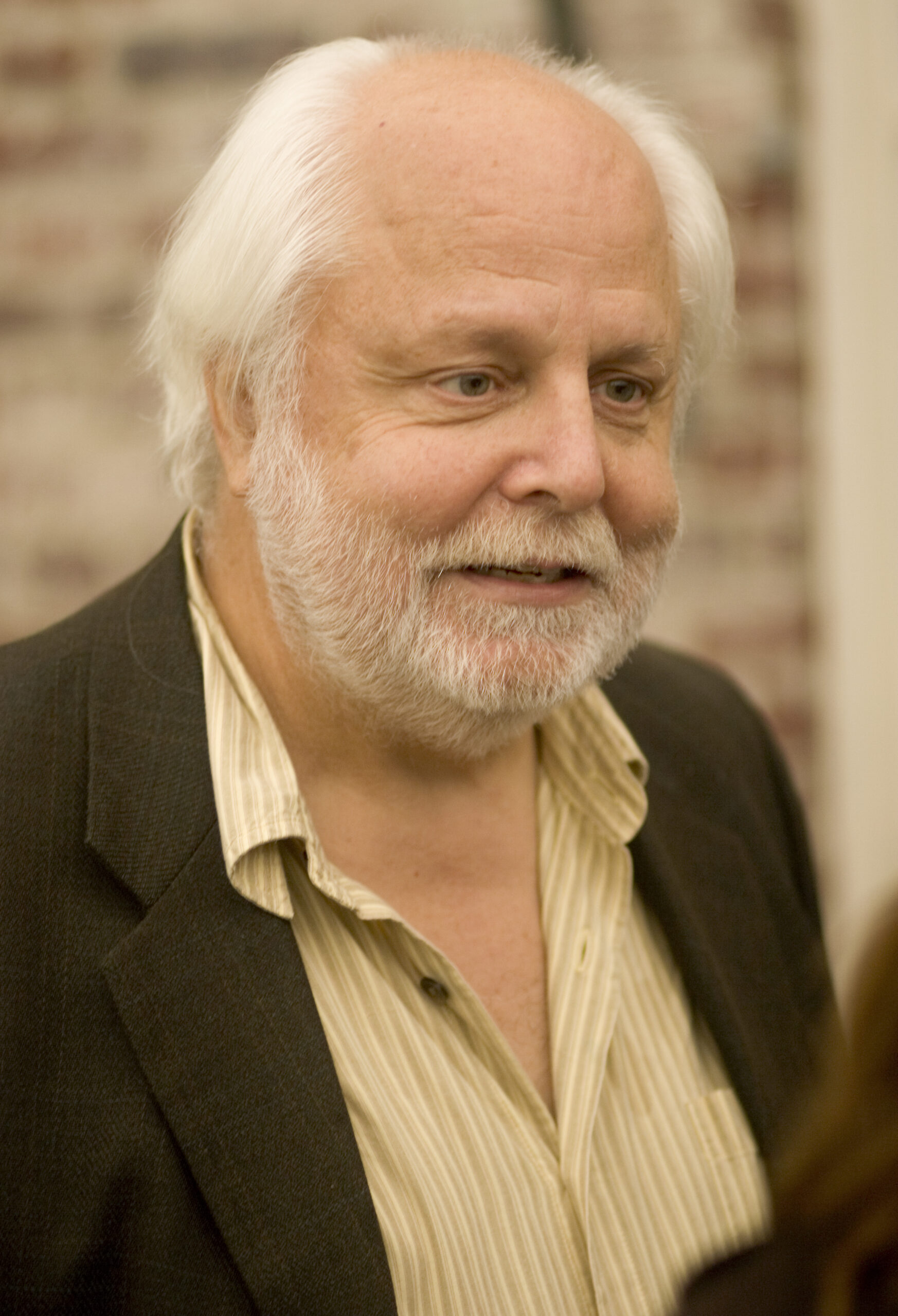
A. Neil Pappalardo ‘64, co-founder of MEDITECH (Medical Information Technology, Inc.) and a leading supporter of the MIT Department of Physics for decades, died on January 27, 2026, at age 83. He leaves behind his wife of 61 years, Jane; their four children; and 13 grandchildren. Pappalardo’s […]
- New catalog more than doubles the number of gravitational-wave detections made by LIGO, Virgo, and KAGRA observatoriesby admin on 05/03/2026
When the densest objects in the universe collide and merge, the violence sets off ripples, in the form of gravitational waves, that reverberate across space and time, over hundreds of millions and even billions of years. By the time they pass through Earth, such cosmic ripples are barely […]
- For one learner, online MIT courses are “like getting a Ferrari for the price of an electric scooter”by Kim Heatley on 05/03/2026
As a professional mechanical engineer, Badri Ratnam was inspired when MIT started offering massive open online courses (MOOCs) in engineering and science in 2012. He wondered if he was up to the challenge of solving problem sets and successfully completing exams from MIT. Ratnam first began his […]
- Faculty discuss new TFUAP curriculum proposal at February meetingby Kim Heatley on 26/02/2026
On Feb. 18, MIT faculty gathered in Huntington Hall (10-250) for the first faculty meeting of 2026, where they discussed the recent proposal released by the Task Force on the Undergraduate Academic Program (TFUAP). The set of recommendations, made public on Feb. 5, outlines sweeping changes to the […]
- MIT faculty, alumni named 2026 Sloan Research Fellowsby admin on 20/02/2026
Eight MIT faculty and 22 additional MIT alumni are among 126 early-career researchers honored with 2026 Sloan Research Fellowships by the Alfred P. Sloan Foundation. The fellowships honor exceptional researchers at U.S. and Canadian educational institutions, whose creativity, innovation, and […]
- Patrick Mang and Katherine Panebianco: dual perspectives on physics at MITby Kim Heatley on 17/02/2026
Trigger warning: mention of suicide Hello! The Student Spotlight column is back — with an alumni twist this time. Instead of just one student, we’re putting two Course 8s in conversation with each other. Patrick Mang ’98 is a Course 8 alum who moved to London after his PhD and runs the […]
- EPJ QT Highlight - Teaching quantum entanglement with card games
 by sabine.lehr@springer.com (EPJ) on 10/02/2026
Understanding violation to Bell’s Inequality with a card game Simple interactive activities help non-expert audiences to grasp the core concepts of quantum entanglement and the Nobel Prize-winning experiments that proved how quantum mechanics defies classical physics Even compared with other […]
- EPJ QT Highlight - Exploring the full-stack design space of quantum computing
 by sabine.lehr@springer.com (EPJ) on 10/02/2026
Illustration of fidelity vs. connectivity across benchmarks as facets comparing three crosstalk models, thermal relaxation, and depolarisation noise for the heavy-hex back-end topology. In-depth analysis shows that co-designing hardware and software is essential for optimising quantum […]
- EPJ QT Highlight - Progress in terrestrial very long baseline atom interferometry
 by sabine.lehr@springer.com (EPJ) on 12/05/2025
Atom interferometers (here labelled AION, AEDGE and AEDGE+) fill a crucial frequency gap in gravitational wave detection, in the deci-Herz range. The second of a series of workshops, held in London in April 2024, saw over 250 experts make progress towards a blueprint for a kilometre-long atom […]
- EPJ QT Highlight - Generating true randomness with quantum measurements
 by sabine.lehr@springer.com (EPJ) on 10/02/2025
Inherent randomness in photon detection times A new approach can generate random information with extremely high efficiency through a process involving the emission and subsequent detection of single photons From simulation to cryptography, randomness is a vital resource in many areas of […]
- EPJ QT Highlight - Access to burgeoning quantum technology field could be widened by open master educational model
 by sabine.lehr@springer.com (EPJ) on 04/03/2024
The operation of the Open Master pilot scheme. Credit: S. Goorney, et al., EPJ Quantum Technology, (2024) Quantum technology offers major societal benefits, but its growth depends on the supply of a qualified workforce. Quantum Technology is based on the engineering of devices that make use […]
- EPJ Quantum Technology: New Review Article The Deep Space Quantum Link (DSQL)
 by sabine.lehr@springer.com (EPJ) on 12/10/2022
A new review lays out a roadmap for quantum technologies. Credit: Robert Lea Space-based quantum optical links support future networking applications for quantum sensing, quantum communications, and quantum information science. In addition, such links enable new scientific experiments […]
- EPJ QT Highlight - Quantum control for advanced technology: Past and present
 by sabine.lehr@springer.com (EPJ) on 29/07/2022
A new review lays out a roadmap for quantum technologies. Credit: Robert Lea Quantum devices are a promising technological advance for the future, but this will hinge on the application of quantum optimal control top real-world devices. A new review looks at the status of the field as it […]
- EPJ QT Highlight - Steps towards post-quantum security by Aleksey Fedorov
 by sabine.lehr@springer.com (EPJ) on 21/07/2021
Aleksey Fedorov Prof. Dr. Aleksey Fedorov is a Junior Principal Investigator at the Russian Quantum Center, Professor of Physics at Moscow Institute of Physics and Technology, and founder of startup companies in quantum technologies. His research is related to quantum information technologies […]
- Welcoming Prof. Kai Bongs as new Editor-in-Chief of EPJ Quantum Technology
 by sabine.lehr@springer.com (EPJ) on 26/01/2018
Kai Bongs It is with great pleasure that we announce that Professor Kai Bongs from the University of Birmingham, UK, has been appointed Editor-in-Chief of EPJ Quantum Technology. Prof. Bongs is the director of the UK National Quantum Technology Hub in Sensors and Metrology, a consortium of […]
- EPJ QT Highlight - How does Earth’s spacetime deformation affect quantum communications?
 by sabine.lehr@springer.com (EPJ) on 30/05/2017
Credit: CQT, National University of Singapore Jan Kohlrus investigates relativitic effects to consider when setting up quantum communication systems. The interplay and overlap between relativity and quantum theory are among the most complex and challenging open problems of modern theoretical […]
- Anna Grigoryan new representative of the EPS Young Minds in EPJ Scientific Advisory Committee (SAC)
 by sandrine.karpe@edpsciences.org (Sandrine Karpe) on 24/03/2026
The Steering Committee of EPJ is delighted to welcome Anna Grigoryan, as the representative of the EPS Young Minds which joined the Scientific Advisory Committee two years ago. She is replacing Carlos Damián Rodríguez Fernández. The scientific community is pleased to highlight Anna […]
- EPJ Web of Conferences Highlight – 18th European Workshop on Modern Developments and Applications in Microbeam Analysis
 by elodie.guillaud@edpsciences.org (Elodie Guillaud) on 20/03/2026
The 18th European Workshop EMAS 2025, Mataró, Spain. The 18th Workshop of the European Microbeam Analysis Society (EMAS) on Modern Developments and Applications in Microbeam Analysis took place in Mataró, Spain from 11-15 May 2025. The EMAS European Workshops have been organized every […]
- Farewell Antonino Zichichi
 by sabine.lehr@springer.com (EPJ) on 18/03/2026
Antonino Zichichi© Società Italiana di Fisica - SIF Professor Emeritus at the University of Bologna, Member of the Pontifical Academy of Sciences, the Academia Europaea and the Academy of Sciences of the Institute of Bologna, and founder of the "Ettore Majorana" Centre for Scientific Culture […]
- EPJ Plus Highlight - Image processing brings new clarity to RTe3’s electronic structure
 by sabine.lehr@springer.com (EPJ) on 05/03/2026
Applying image processing to ARPES measurements By applying image segmentation to ARPES data, researchers reconcile Fermi surface measurements with magnetic quantum oscillations and precisely determine the size of tiny electron pockets in rare-earth tritellurides. Rare-earth tritellurides […]
- EPJ Plus Focus Point: Nuclear microprobe technology and applications
 by sabine.lehr@springer.com (EPJ) on 05/03/2026
Guest Editors: Noelia Maldonado, María Dolores Ynsa, Belén Cortés, José Olivares Villegas, Teresa Pinheiro, Esther Enríquez, M. Carmen Jiménez-Ramos, Gastón García This Focus Point issue includes 19 papers showcasing the diversity and innovation within the nuclear microprobe community, […]
- EPJ Plus Focus Point: CBRNE events: prevention, mitigation, consequences and recovery
 by sabine.lehr@springer.com (EPJ) on 04/03/2026
Guest Editors: Andrea Malizia, Marco D’Arienzo, Gian Marco Contessa, Francesco d’Errico, Susana de Souza Lalic, Frank Duschek, Vasilis Vasiliou, Antony M. Hooker, Pasquale Gaudio CBRNE (Chemical, Biological, Radiological, Nuclear and Explosive) events remain among the most complex and […]
- EPJ Plus Highlight - GEMINI: Suppressing seismic noise for future gravitational-wave detectors
 by sabine.lehr@springer.com (EPJ) on 04/03/2026
Sensor for isolating seismic noise By refining seismic isolation and control strategies deep underground, GEMINI aims to unlock the low-frequency frontier of gravitational-wave astronomy Since the first observation of gravitational waves in 2015, detectors including LIGO, Virgo, and KAGRA have […]
- Igor Jex joins the EPJ Scientific Advisory Committee (SAC)
 by sandrine.karpe@edpsciences.org (Sandrine Karpe) on 03/03/2026
The Steering Committee of EPJ is delighted to welcome Professor Igor Jex, as the new representative of the Czech Physical Society. Igor Jex is Professor at the Czech Technical University in Prague, Faculty of Nuclear Sciences and Physical Engineering, fellow member of Institute of Physics […]
- EPJ Web of Conferences Highlight - RFPPC2025 – 25th Topical Conference on Radio-Frequency Power in Plasmas
 by elodie.guillaud@edpsciences.org (Elodie Guillaud) on 03/03/2026
25th edition of the Topical Conference on Radio-Frequency Power in Plasmas in Hohenkammer, Germany. The 25th Topical Conference on Radio-Frequency Power in Plasmas brought together 126 experts from around the world to Schloss Hohenkammer, Germany, from May 19 to 22, to discuss advances in the […]
- New EPJ Plus Section: Radiation Physics and CBRNe Science
 by sabine.lehr@springer.com (EPJ) on 03/03/2026
EPJ Plus is proud to announce the launch of a new section “Radiation Physics and CBRNe Science” established to provide a unified scientific platform where radiation physics and CBRNe science are equally represented as complementary and interdependent domains. Within this integrated framework, […]
- EPJ C: Julia Vogel new Editor-in-Chief for Experimental Physics II: Astroparticle Physics
 by sabine.lehr@springer.com (EPJ) on 12/12/2025
Julia K. Vogel (Credit © Mattie Trigo) The publishers of The European Physical Journal C – Particles and Fields are pleased to announce the appointment of Professor Julia K. Vogel as new section Editor-in-Chief for Experimental Physics II: Astroparticle Physics, succeeding in this role to […]
- EPJ C: Markus Elsing new Editor-in-Chief for Computing, Software and Data Science
 by sabine.lehr@springer.com (EPJ) on 28/01/2025
Markus Elsing The publishers of The European Physical Journal C – Particles and Fields are pleased to announce the appointment of Dr Markus Elsing as Editor-in-Chief for the newly created section on Computing, Software and Data Science as of January 2025. Markus Elsing is a senior […]
- EPJ C: Susha Parameswaran appointed Guest Editor for String Phenomenology
 by sabine.lehr@springer.com (EPJ) on 18/10/2024
Susha Parameswaran EPJ C is pleased to announce the appointment of Susha Parameswaran as the journal’s Guest Editor for String Phenomenology. Susha Parameswaran is a theoretical physicist based in the UK at the University of Liverpool. Her research interests are in string theory and its […]
- EPJ C Highlight - The ALICE experiment – A journey through QCD
 by sabine.lehr@springer.com (EPJ) on 04/09/2024
ALICE Collaboration The comprehensive review article “The ALICE experiment – A journey through QCD” has been recently published in the European Physical Journal C (EPJ C). As of today, QCD is a gauge theory describing the interactions of quarks and gluons, the carriers of the strong […]
- EPJ C: Francesco Forti new Editor-in-Chief for Experimental Physics I: Accelerator Based High-Energy Physics
 by sabine.lehr@springer.com (EPJ) on 15/12/2023
Extracted from Photograph: Ordan, Julien © 2019-2023 CERN The publishers of The European Physical Journal C – Particles and Fields are pleased to announce the appointment of Professor Francesco Forti as new Editor-in-Chief for Experimental Physics I: Accelerator Based High-Energy Physics, […]
- EPJ C Highlight - Celebrating 50 years of QCD with a comprehensive review
 by sabine.lehr@springer.com (EPJ) on 13/12/2023
Figure with permission by A Deur (JLAB) and E Klempt (University of Bonn) (click on the figure for full size) A series of key experiments performed about 50 years ago revealed the eminent role of gauge theories. Two theories were formulated: the electroweak theory and the strong interaction […]
- EPJ C: Emilian Dudas new Editor-in-Chief for Theoretical Physics III: Quantum Field Theory and Gravity - Fundamental and Formal Aspects
 by sabine.lehr@springer.com (EPJ) on 31/10/2023
The publishers of The European Physical Journal C – Particles and Fields are pleased to announce the appointment of Professor Emilian Dudas as new Editor-in-Chief for Theoretical Physics III: Quantum Field Theory and Gravity - Fundamental and Formal Aspects, replacing Professor Kostas Skenderis […]
- EPJ C Highlight: Exploring the duality of gravity and gauge theory
 by sabine.lehr@springer.com (EPJ) on 03/11/2022
Gauge/gravity duality aims to unify leading physical theories. https://commons.wikimedia.org/ wiki/File:Calabi_yau.jpg This EPJ C Topical Collection presents a series of reviews showcasing the latest developments and applications of gauge/gravity duality, and aims at dissemination to a wider […]
- EPJ C Topical Issue on New frontiers in holographic duality: From quantum complexity and black holes to hydrodynamics and neutron stars
 by sabine.lehr@springer.com (EPJ) on 20/10/2022
Guest Editor: Ayan Mukhopadhyay Over the last 25 years, holographic duality has revolutionised our understanding of gauge theories, quantum many-body systems and also quantum black holes. This topical issue is a collection of review articles on recent advances in fundamentals of holographic […]
- EPJ C: Giulia Zanderighi new Editor-in-Chief for Theoretical Physics I: Phenomenology of the Standard Model and Beyond
 by sabine.lehr@springer.com (EPJ) on 02/05/2022
The publishers of The European Physical Journal C – Particles and Fields are pleased to announce the appointment of Professor Giulia Zanderighi as new Editor-in-Chief for Theoretical Physics I: Phenomenology of the Standard Model and Beyond, replacing Professor Dieter Zeppenfeld as of 1 May […]